The Quick Answer: Why Do You Need One?
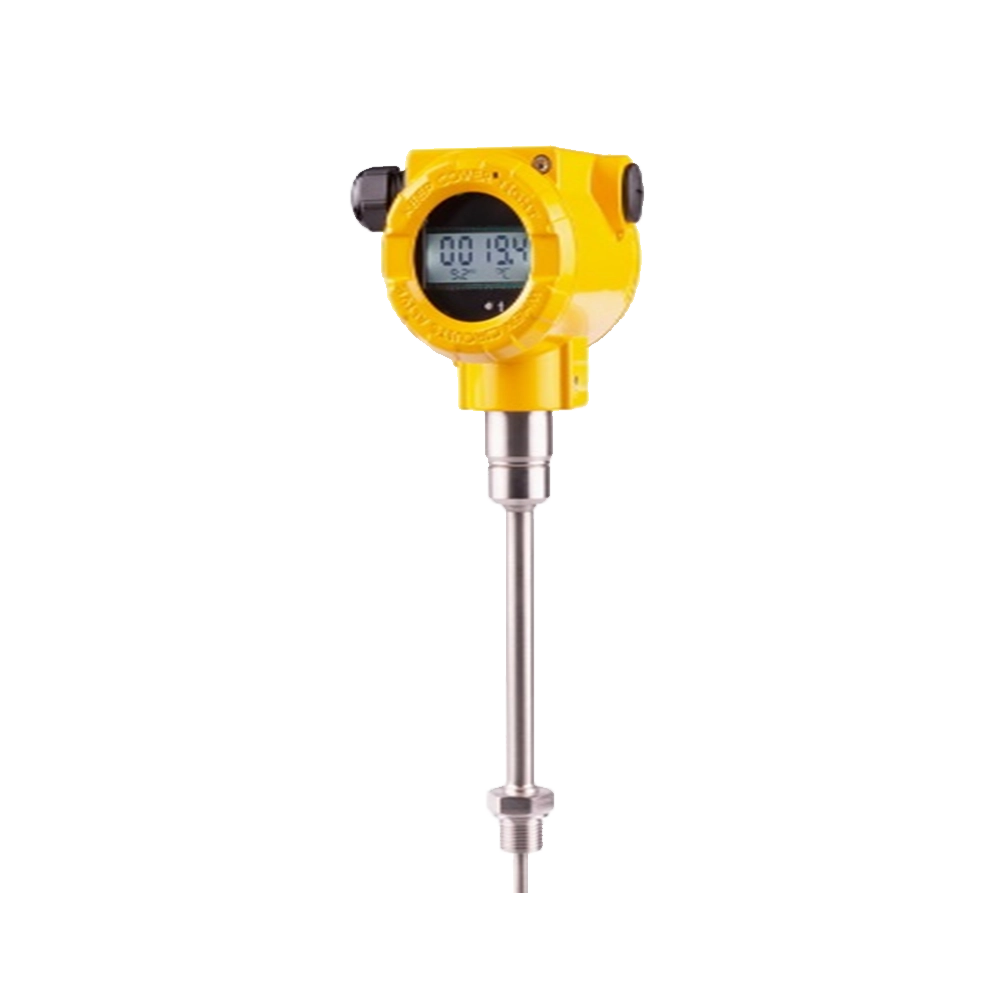
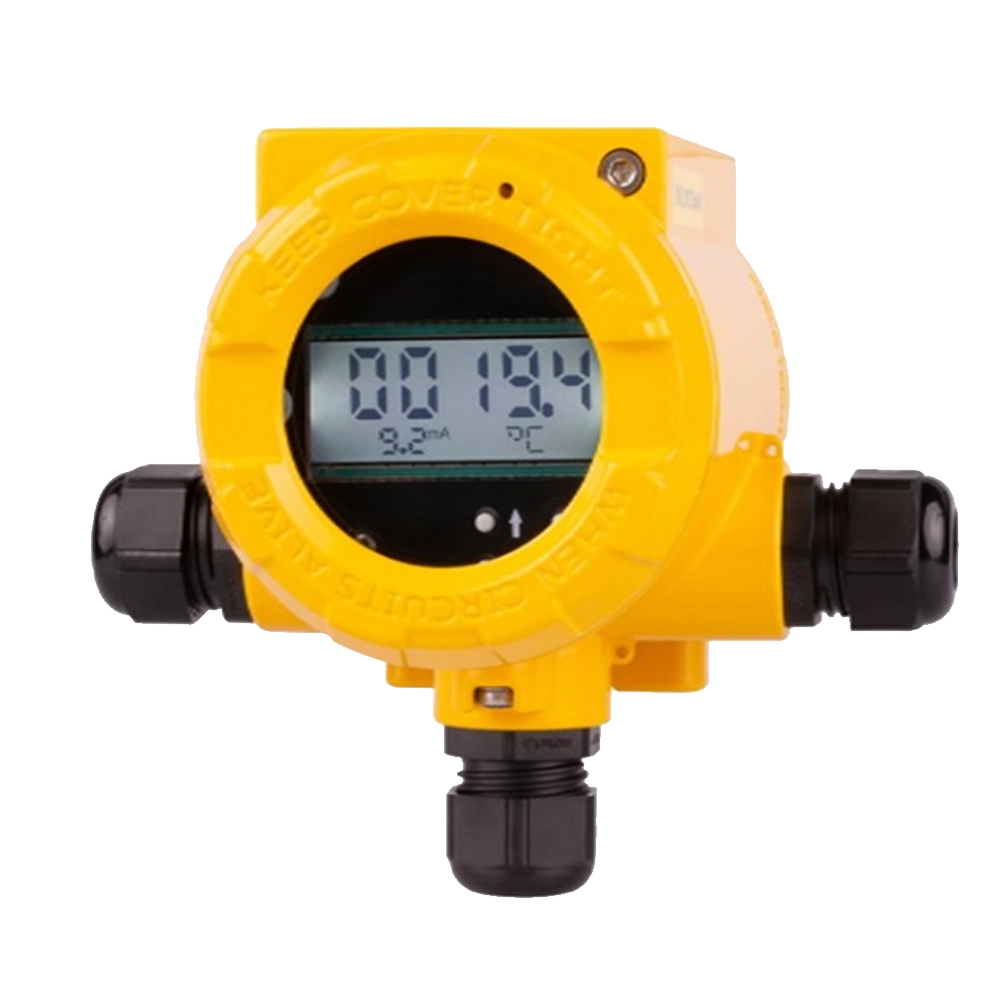
A temperature transmitter is a device that connects a temperature sensor (like a Pt100 or Thermocouple) to a control system (PLC or DCS).
You might ask: “Why not connect the sensor directly to the PLC?”
The Answer: Direct sensor signals are weak. A thermocouple generates millivolts, and an RTD measures resistance. Both are easily corrupted by electrical noise (EMI) from motors and VFDs.
A transmitter solves this by converting that weak signal into a robust, amplified 4-20mA signal that can travel long distances without error. If your sensor is more than 50 meters from your control room, a temperature transmitter is mandatory for accuracy.
1. What is a Temperature Transmitter?
In simple terms, think of a temperature transmitter as a “translator” and an “amplifier.”
- Translation: It takes the raw input from the sensor (Ohms or Millivolts).
- Amplification: It converts it into a standardized analog output, usually 4-20mA (milliampere).
This 4-20mA signal is the “language” that almost all industrial PLCs and controllers understand. By standardizing the signal, you ensure that your process instrumentation is modular and easy to upgrade.
2. Types of Transmitters: Head Mount vs. DIN Rail
When ordering from an OEM like Nuicon, you will typically choose between two physical formats.
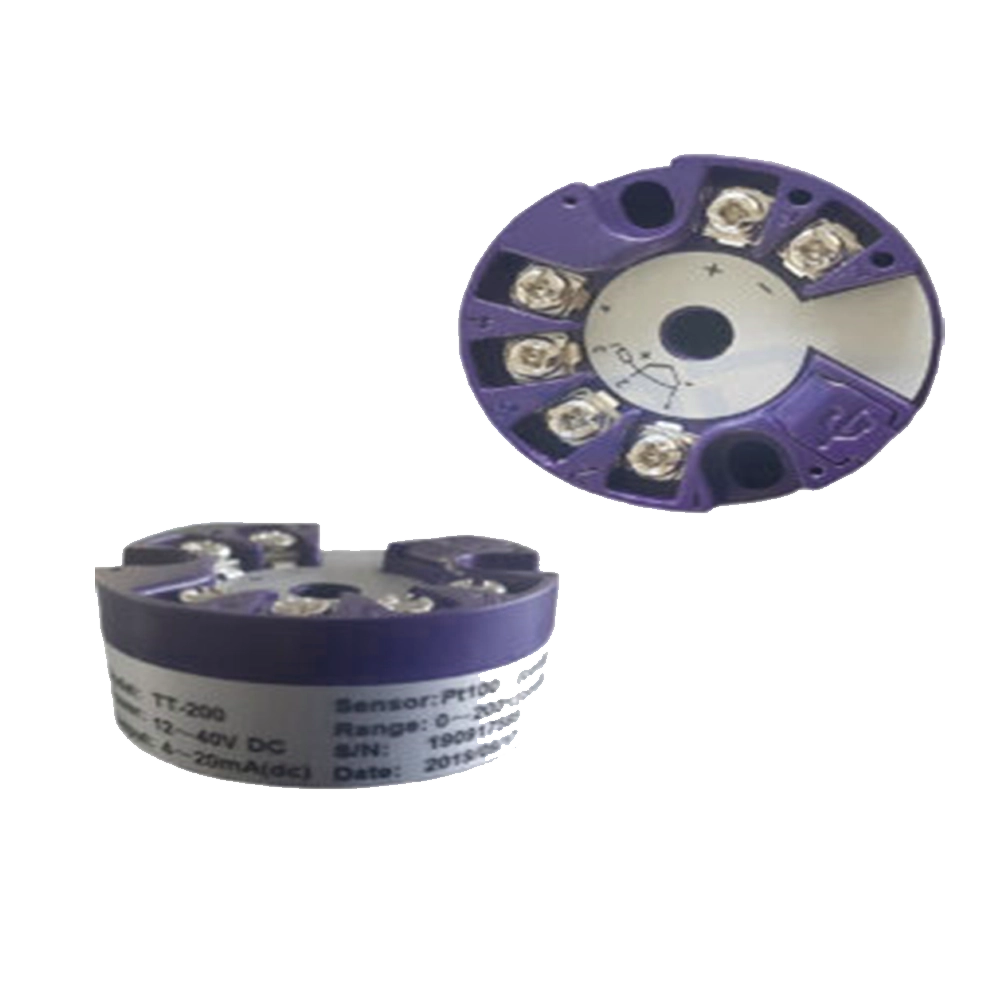
A. Head Mount Transmitter
- Design: A small, hockey-puck-shaped device that fits inside the connection head of the temperature sensor itself.
- Pros: Saves panel space; the signal is converted right at the source, maximizing noise immunity.
- Best For: Field applications where you want to run cheap copper cable back to the control room instead of expensive extension wires.
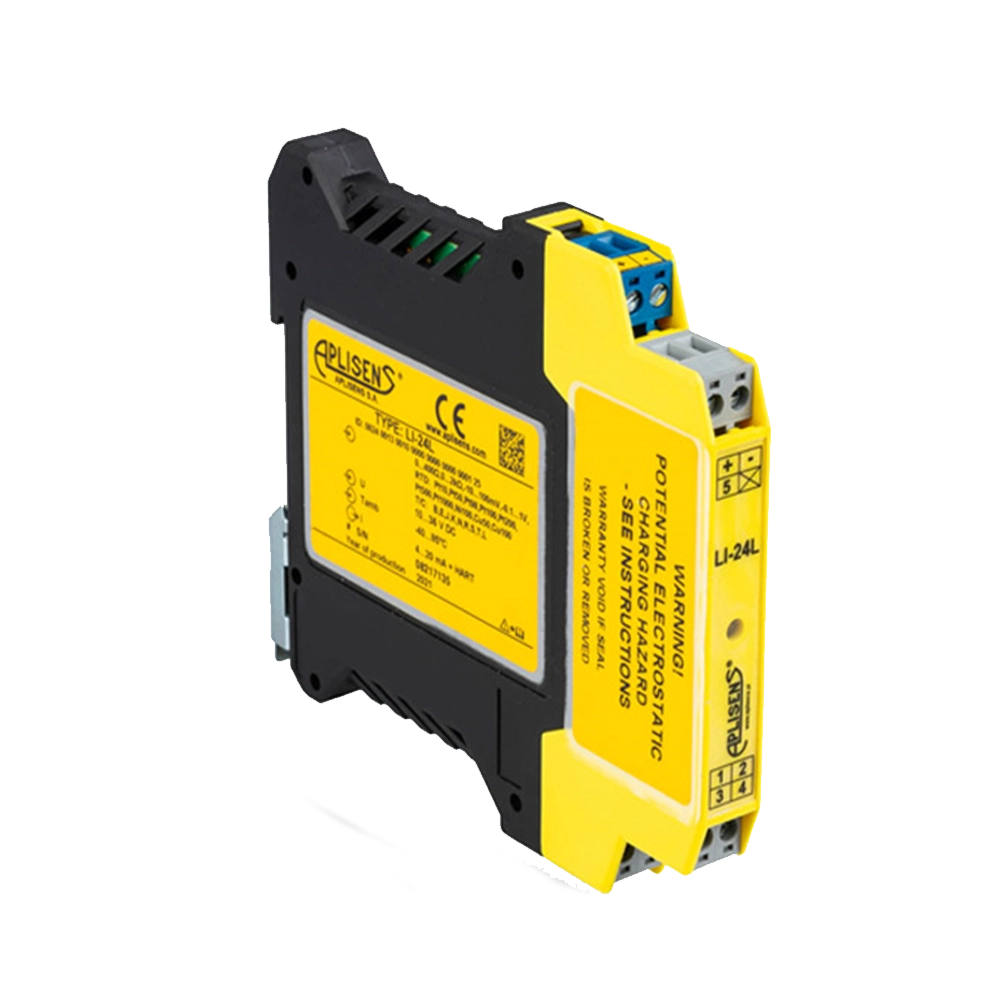
B. DIN Rail Mount Transmitter
- Design: A slim module that snaps onto a standard DIN rail inside your control cabinet.
- Pros: Easier to access for maintenance; keeps delicate electronics away from the heat of the process.
- Best For: Hot environments where the sensor head gets too hot for electronics, or when you need easy access for calibration.
3. Why is 4-20mA the Industry Standard?
You will often hear the term 4-20mA temperature transmitter. Why do we use current (Amps) instead of Voltage (Volts)?
- Noise Immunity: Current signals are much less affected by electrical interference (radio waves, motor spikes) than voltage signals.
- Cable Resistance: Voltage drops over long cables, causing errors. Current does not drop; if you push 20mA in one end, 20mA comes out the other, regardless of cable length (within limits).
- “Live Zero”: If the cable breaks, the signal drops to 0mA. Since the process range starts at 4mA, the controller instantly knows “0mA means broken wire,” not “0 degrees temperature.” This is a crucial safety feature.
4. Smart vs. Analog Transmitters
Older transmitters were “fixed range” (e.g., 0-100°C). If you wanted to change the range, you had to use a screwdriver to adjust tiny potentiometers (Zero/Span).
Modern smart transmitters are digital.
- Configurable: You can connect them to a PC or use a handheld programmer to change the input type (Pt100 to Type K) or the range (0-100°C to 0-500°C) in seconds.
- Diagnostic: They can tell you if the sensor is drifting or if the ambient temperature is too high.
Nuicon Expert Tip: We recommend using universal input transmitters. They allow you to stock one single part number that can handle RTDs, Thermocouples, and various temperature ranges, reducing your inventory costs.
Frequently Asked Questions (FAQs)
Q: What is the maximum distance for a 4-20mA signal?
A: A 4-20mA signal can travel very long distances—often up to 1,000 meters (1 km)—without signal degradation, provided you use a quality shielded cable.
Q: Do I need a transmitter if my PLC has an RTD input card?
A: Not necessarily. If the sensor is close to the PLC (<50m) and there is low electrical noise, direct wiring is fine. However, a transmitter is always safer and more accurate for industrial environments.
Q: Can Nuicon transmitters be calibrated?
A: Yes. All our transmitters can be calibrated in our NABL-traceable calibration lab. We can set the specific range you need (e.g., 0-150°C) before shipping.
Conclusion: The Critical Link in Your Control Loop
The temperature transmitter is the unsung hero of industrial automation. It protects your data integrity, simplifies your wiring, and ensures your PLC sees exactly what the sensor sees.
Whether you need a compact head mount transmitter for a tight space or a high-precision DIN rail isolator for a control panel, choosing the right device prevents “ghost” readings and process errors.
Looking for reliable signal converters? View Nuicon’s Range of Transmitters or ask our engineers for a custom configuration today.