
Rosemount 4051S Pressure Transmitter:- Features, spec and applications
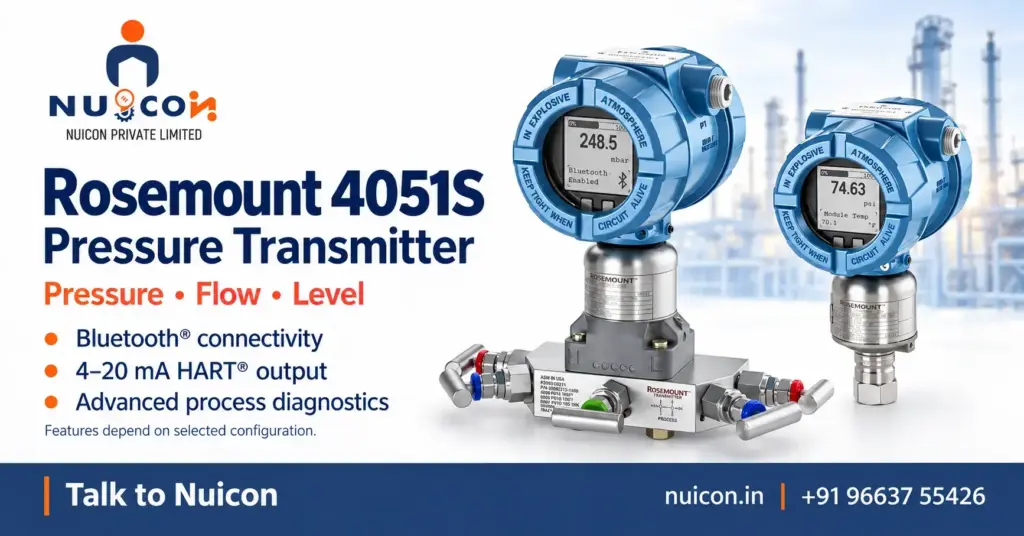
Rosemount 4051S Pressure Transmitter: Features, Specs & Applications The Rosemount 4051S Pressure Transmitter is designed for industrial processes where accurate and consistent pressure measurement is essential. Depending on the configuration, it can measure differential, gauge and absolute pressure, with options for flow and level applications. It combines measurement accuracy with wide rangedown, extended stability, intelligent diagnostics and digital connectivity. These capabilities make it suitable for process environments where reliable measurement and useful device information are important for operation, control and maintenance. What Is the Rosemount 4051S? A pressure transmitter measures process pressure and converts it into a signal that can be used by industrial control and monitoring systems. The Rosemount 4051S adds configurable measurement options, diagnostic functions and field connectivity to support modern process instrumentation requirements. How Does a Pressure Transmitter Work? Pressure Sensing The sensing element detects changes in pressure from the connected process. Signal Processing Internal electronics process the sensor signal and prepare it for industrial transmission. System Integration The measured value can be communicated to control, monitoring and asset-management systems. Diagnostic Monitoring Diagnostic functions provide additional information about selected process and device conditions. Key Features Up to 0.025% Accuracy Selected configurations provide up to 0.025% reference accuracy for demanding measurement applications. Up to 800:1 Rangedown Wide rangedown provides greater flexibility when measurement requirements change across the process. Up to 20-Year Stability Selected configurations are designed for extended measurement stability over long operating periods. Bluetooth® Connectivity Wireless connectivity provides convenient access for configuration and field device interaction. Graphical Backlit Display The local display makes process values and device information easier to view. 4–20 mA HART® Communication Provides a familiar communication interface for industrial control and instrumentation systems. Integral Relay Options Selected configurations can combine pressure measurement with relay-based switching functionality. Advanced Diagnostic Capabilities Process Intelligence Provides additional process information to help users understand changing operating conditions. Plugged Impulse Line Detection Helps identify potential impulse-line blockage that could affect pressure measurement. Loop Integrity Provides information about electrical loop conditions that may influence signal performance. Process Alerts Highlights selected process or device conditions that may require operator attention. Proof-Test Support Available proof-testing functions can assist with instrument verification and maintenance activities. Measurement Capabilities Differential Pressure Measures the pressure difference between two process points for applications such as flow and level measurement. Gauge Pressure Measures process pressure in relation to atmospheric pressure. Absolute Pressure Measures pressure against an absolute vacuum reference. Flow Measurement Specific configurations can support differential-pressure-based flow measurement. Level Measurement Suitable configurations can support pressure-based level measurement in process vessels and systems. Connectivity and Field Configuration 4–20 mA HART® Supports integration with established industrial measurement and control systems. Bluetooth® Provides wireless access to device information and configuration functions where supported. Local Display The graphical backlit display provides convenient access to process and device information. Design for Industrial Applications Hermetically Welded Sensor Platform The welded sensor construction is designed to support operation in demanding industrial environments. Pressure Protection The sensor architecture is designed to help manage the effects of pressure-related stresses on measurement performance. Flexible Configurations Multiple configurations allow the transmitter to be selected according to measurement type, range and application. Safety Options Selected configurations are available with SIL 2/3 certification options for applicable safety-related applications. Technical Specifications Specification Details Product Type Pressure Transmitter Measurement Types Differential, Gauge & Absolute Reference Accuracy Up to 0.025% Rangedown Up to 800:1 Stability Up to 20 years Communication 4–20 mA HART® Wireless Connectivity Bluetooth® Display Graphical Backlit Display Diagnostics Process Intelligence, Loop Integrity, Plugged Impulse Line & Process Alerts Relay Function Available on selected configurations Applications Pressure, Flow & Level Proof Testing Available Safety Options SIL 2/3 configurations Pressure Range Configuration dependent Specifications may vary according to the selected model and configuration. Pressure Range and Configuration Selecting the appropriate pressure range is important for achieving the required measurement performance. Differential and Gauge Pressure Selected Coplanar configurations support differential and gauge pressure measurement up to 2,000 psi (137.9 bar). Absolute Pressure Selected Coplanar configurations support absolute pressure measurement up to 4,000 psia (275.8 bar). Higher-Pressure Measurement Selected In-Line configurations can support gauge and absolute pressure measurement up to 10,000 psi. The appropriate range and configuration should be selected according to the actual process conditions. Industrial Applications Oil & Gas Supports pressure monitoring across production, processing and pipeline systems. Chemical Processing Suitable for pressure measurement across demanding chemical process operations. Power Generation Supports pressure, flow and level measurement across power-related processes. Water & Wastewater Helps monitor pressure and process conditions across treatment and distribution systems. Pharmaceutical Processing Suitable for selected process and utility measurement requirements. Process Manufacturing Supports pressure monitoring across automated production and processing operations. Pump and Pipeline Systems Helps track pressure conditions across pumping systems and connected pipelines. Flow Measurement Selected configurations can support differential-pressure-based flow measurement systems. Benefits of the 4051S Measurement Flexibility Wide rangedown and multiple measurement options help accommodate different process requirements. Additional Process Information Diagnostic functions provide useful information beyond the primary pressure reading. Convenient Field Access Bluetooth® connectivity can simplify device access during configuration and maintenance. Long-Term Measurement Capability Extended stability specifications support applications requiring sustained measurement performance. Flexible System Integration Communication and configuration options allow the transmitter to fit different instrumentation architectures. How to Select the Right Configuration Identify the Measurement Type Determine whether the application requires differential, gauge or absolute pressure measurement. Define the Pressure Range Consider normal, minimum and maximum process pressures before selecting the appropriate range. Check Process Conditions Review process temperature, media compatibility, vibration and environmental conditions. Select Communication Choose the communication method required by the control and monitoring system. Consider Diagnostic Requirements Identify the diagnostic functions that are relevant to the process and maintenance strategy. Review the Process Connection Confirm the required connection, materials and installation arrangement before ordering. Installation Considerations Choose the Installation Location Select a location appropriate for the process, environmental and operating conditions. Plan Impulse Lines Properly Good impulse-line routing can help minimise measurement issues and maintenance requirements. Consider Temperature and Vibration Evaluate temperature variation and vibration when