The Quick Answer: Which Flow Meter Do You Need?
If you are looking for a quick recommendation on types of flow meters, here is the industry cheat sheet:
- Electromagnetic (Magmeter): Best for water and wastewater. (Must be a conductive liquid).
- Ultrasonic Flow Meter: Best for non-intrusive measurement (clamp-on) or large pipes where cutting is difficult.
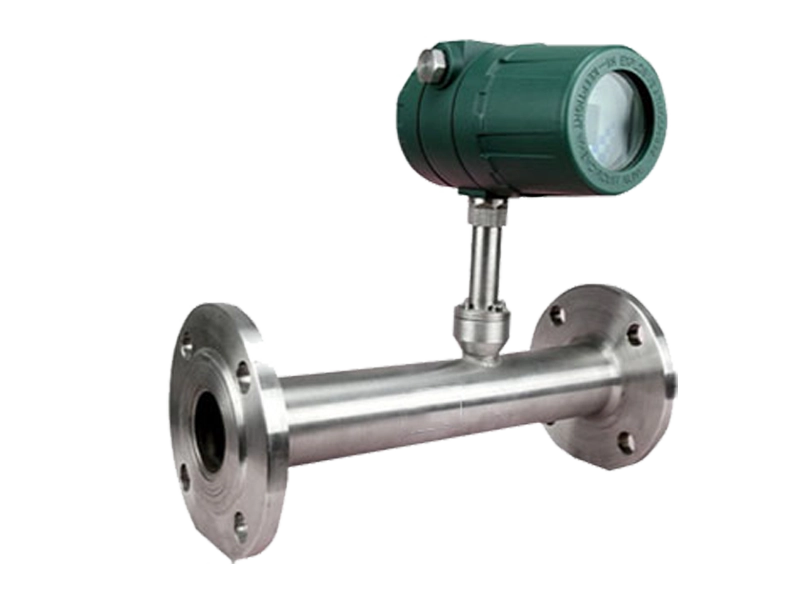
- Vortex Flow Meter: Best for steam and gas applications.
- Coriolis Mass Flow Meter: Best for high accuracy and measuring mass (kg) instead of volume (liters). Ideal for chemical dosing.
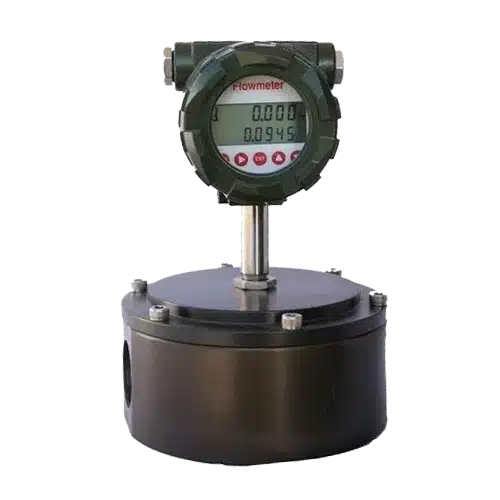
- Turbine Flow Meter: Best for clean, low-viscosity fuels like diesel or petrol.
Introduction: Measuring the Pulse of Your Plant
In any industrial plant, liquid and gas flow is like the blood in the veins. Whether you are managing a water treatment plant (STP/ETP), a chemical refinery, or a food processing line, knowing exactly how much fluid is moving is critical for efficiency and billing.
But with so many industrial flow meter technologies available, how do you choose? A meter designed for clean water will fail instantly in sludge, and a meter meant for oil won’t work on steam.
This guide breaks down the top 5 technologies we supply at Nuicon to help you select the right tool for the job.
1. Electromagnetic (Magmeter)
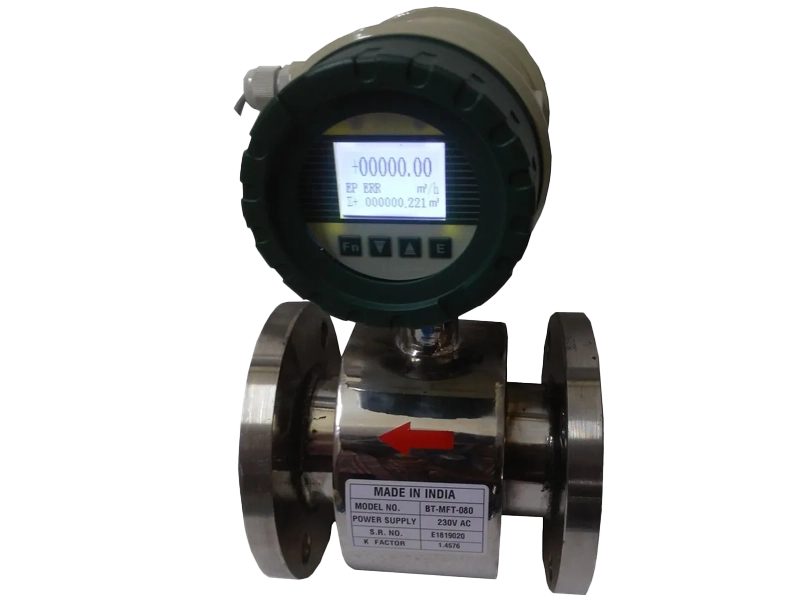
The magnetic flow meter is the workhorse of the water industry. It works on Faraday’s Law of Induction: as a conductive fluid flows through a magnetic field, it generates a voltage.
- How it works: There are no moving parts. Sensors on the pipe wall measure the induced voltage.
- Best Application: Effluent Treatment Plants (ETP), Sewage, Potable Water, and Slurries.
- Limitations: The fluid must be conductive. It cannot measure oil or pure distilled water.
Nuicon Insight: Because they have an open bore (no obstruction), Magmeters experience zero pressure drop and don’t clog, making them perfect for dirty water.
2. Ultrasonic Flow Meters
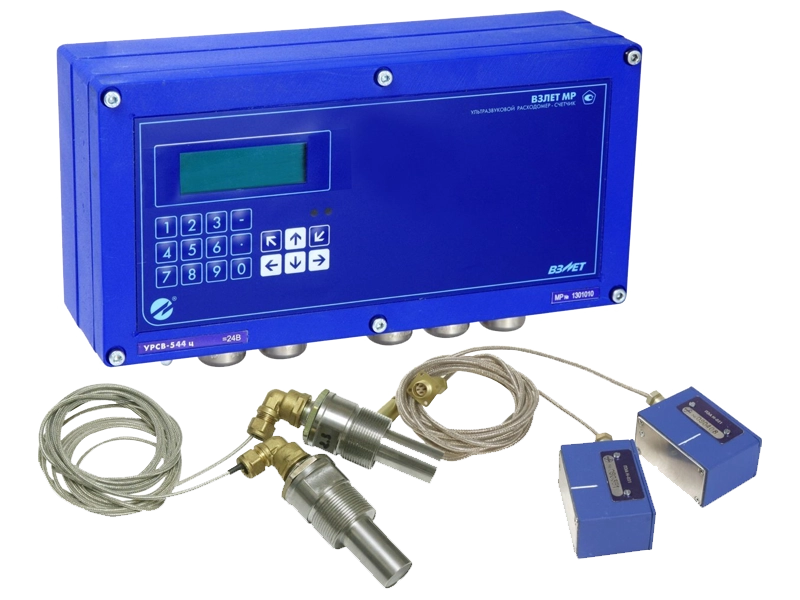
These meters use sound waves to determine flow velocity. They come in two main types: Transit Time (for clean liquids) and Doppler (for dirty liquids).
- How it works: Transducers send ultrasonic pulses upstream and downstream. The difference in time it takes to travel determines the flow rate.
- Best Application: Large pipelines, district cooling, or temporary audits where you don’t want to cut the pipe.
- Key Benefit: Clamp-on ultrasonic flow meters can be installed on the outside of the pipe while the plant is running.
3. Vortex Flow Meters
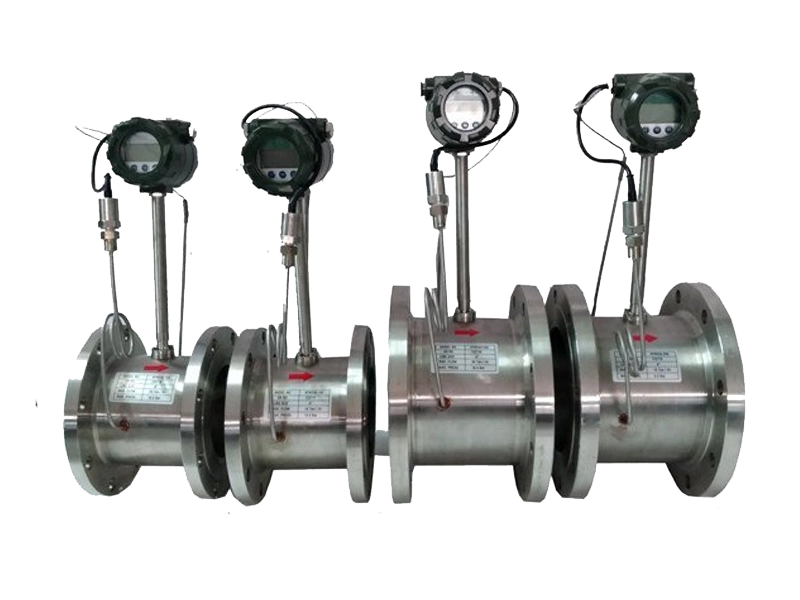
When a fluid flows past an obstacle (a “bluff body”), it creates alternating vortices (swirls). Think of a flag flapping in the wind. A vortex flow meter counts these swirls to calculate flow.
- How it works: A sensor detects the frequency of the vortices shedding off the bluff body.
- Best Application: Steam measurement in boilers, compressed air, and gases.
- Limitations: Not suitable for low flow rates (the vortices stop forming)
4. Coriolis Mass Flow Meters
The Coriolis meter is the “Ferrari” of flow measurement. Unlike other meters that measure volume (liters/min), this measures mass flow (kg/min) directly.
- How it works: Fluid flows through vibrating tubes. The inertia of the fluid causes the tubes to twist. The degree of twist is proportional to the mass flow.
- Best Application: Custody transfer (billing), expensive chemicals, and mixing applications in Pharma and Food & Beverage.
- Key Benefit: Extremely accurate (±0.1%) and measures density/temperature simultaneously.
5. Turbine Flow Meters
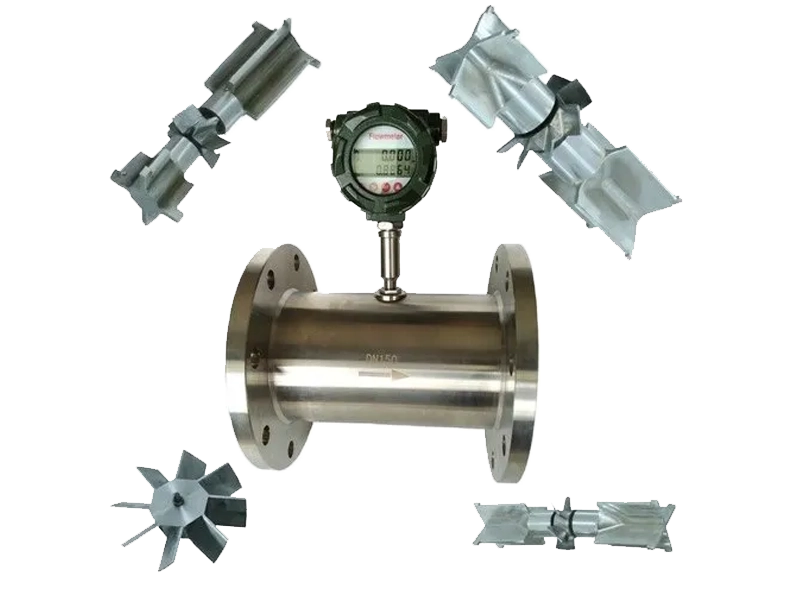
A classic mechanical solution. A turbine flow meter has a rotor (propeller) inside the pipe. The faster the fluid moves, the faster the rotor spins.
- How it works: A pickup sensor counts the blade passes to determine velocity.
- Best Application: Clean, low-viscosity liquids like Diesel, Petrol, and Solvents.
- Limitations: Moving parts mean bearings can wear out. Not good for dirty liquids containing debris.
Comparison Table: At a Glance
Flow Meter Type | Fluid Type | Accuracy | Pressure Drop | Cost |
Magnetic | Conductive Liquids (Water) | High | None | Medium |
Ultrasonic | Clean or Dirty Liquids | Medium | None | Medium/High |
Vortex | Steam, Gas, Low Viscosity Liquid | Medium | Medium | Medium |
Coriolis | Liquids & Gases (High Value) | Very High | High | High |
Turbine | Clean Fuel/Solvents | High | High | Low |
Conclusion: Match the Meter to the Medium
Selecting the right types of flow meters usually comes down to three questions:
- Is the fluid conductive? (If yes $\rightarrow$ Magmeter).
- Is it Steam or Gas? (If yes $\rightarrow$ Vortex).
- Do you need extreme accuracy? (If yes $\rightarrow$ Coriolis).
Need help sizing a flow meter?Browse our Flow Instrumentation Range or contact our application engineers for a free recommendation.