
Rosemount 4051S Pressure Transmitter
Rosemount 4051S Pressure Transmitter: Features, Specs & Applications The Rosemount 4051S Pressure Transmitter is designed for industrial processes where accurate...
Read More →
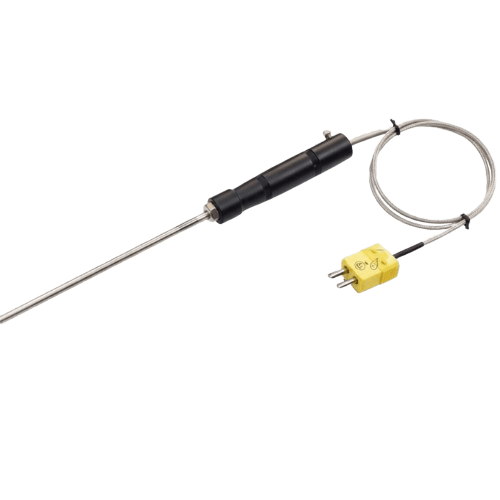

If you need a fast decision on RTD vs Thermocouple, here is the rule of thumb:
In industrial automation, temperature is the single most measured variable. Yet, selecting the right sensor remains one of the most common debates we hear from our clients at Nuicon.
Choosing the wrong sensor isn’t just a technical detail—it impacts your bottom line. An incorrect choice can lead to energy wastage in boilers, inconsistent product quality in chemical batches, or frequent maintenance downtime.
This guide provides a transparent, engineering-grade comparison of the RTD vs Thermocouple to help you make the right choice for your specific plant requirements in 2025.
An RTD (Resistance Temperature Detector) operates on a physical principle where the resistance of a metal increases as the temperature rises.
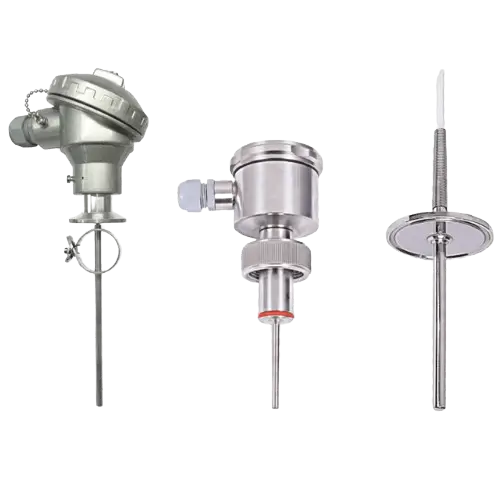
Most industrial RTD sensors are constructed using high-purity Platinum. This is why you will often see them referred to as a Pt100 sensor (100 ohms at 0°C) or Pt1000. Platinum is chosen because it offers a highly linear and stable resistance-temperature relationship.
Nuicon Expert Tip: Because RTDs are sensitive, we often protect them with robust Thermowells to prevent physical damage from flow or pressure.
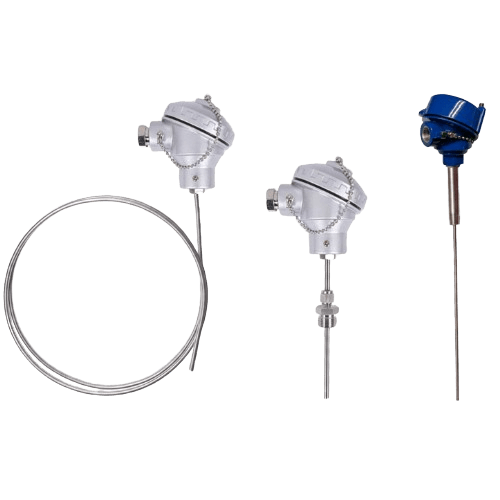
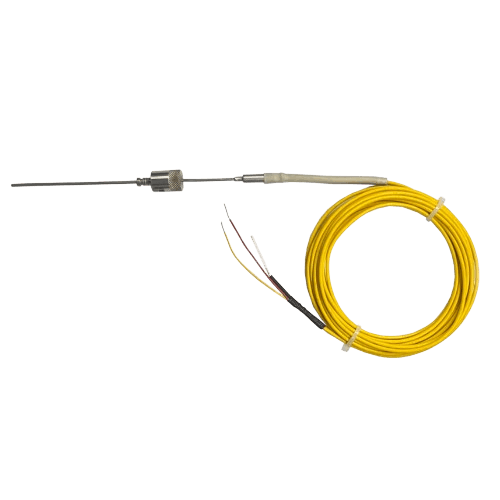
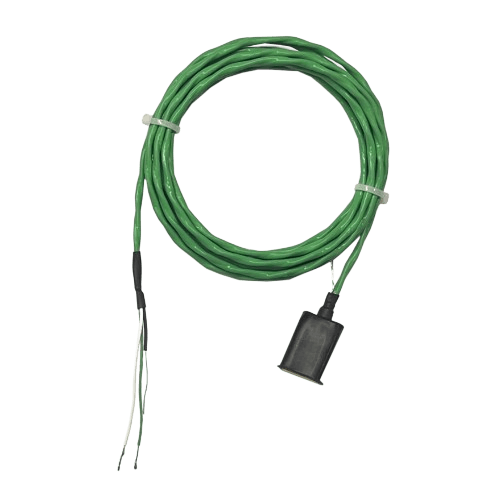
A Thermocouple (TC) is a simpler, more rugged device. It consists of two dissimilar metal wires joined at one end, known as the “hot junction.” When this junction heats up, it generates a tiny voltage (millivolts) via the Seebeck Effect, which the controller reads as temperature.
Unlike RTDs, thermocouple sensors are self-powered and do not require an external excitation current.
When designing an instrumentation system, comparing the specs side-by-side is critical. Here is how they stack up:
Feature | RTD (Resistance Temperature Detector) | Thermocouple (TC) |
Temperature Range | Moderate: -200°C to +850°C | Extreme: -270°C to +2300°C |
Accuracy | High: ±0.1°C (Class A) | Lower: ±0.5°C to ±5.0°C |
Response Time | Slower (2 to 10 seconds) | Very Fast (Fraction of a second) |
Long-Term Drift | Very Low (Stable for years) | Higher (Needs frequent calibration) |
Vibration Handling | Sensitive (Can fail under shock) | Excellent (Handles high vibration) |
Cost | Higher Initial Investment | Lower Initial Cost |
At Nuicon, we recommend evaluating these four factors before placing an order.
This is your first filter. If your application exceeds 850°C—common in metal processing or brick manufacturing—an RTD will physically fail. In this range, a high-temperature thermocouple is your only option.
How tight is your tolerance? If a 1-degree shift affects your product quality (e.g., in a bio-reactor), the Pt100 sensor is the superior choice. Thermocouples have a wider “error margin” which might be unacceptable for precision chemistry.
Does your temperature change rapidly? Because thermocouples measure at the tip (point contact), they react instantly. RTDs usually measure over a larger area (the element length), creating a slight lag. For plastic injection molding, where speed matters, go with a TC.
If the installation point vibrates heavily (like a compressor or generator), the delicate wire construction of a standard RTD might break. A mineral-insulated thermocouple is built to withstand this abuse.
A: Not directly. Their electrical signals are different (Resistance vs. Voltage). To switch, you must ensure your temperature controller or PLC input card supports the new sensor type.
A: The Pt100 offers the best balance of linearity, cost, and stability. It has a resistance of 100 ohms at 0°C, making it a universal standard for industrial instrumentation.
A: For critical industries like Pharma, we recommend sensor calibration every 6 to 12 months. Thermocouples generally drift faster than RTDs and may need more frequent checks.
The debate of RTD vs Thermocouple isn’t about which technology is “better” overall—it is about which is better for your specific process.
Nuicon manufactures both technologies in-house. Whether you need a custom-length Type K thermocouple or a sanitary Pt100 assembly, we deliver OEM-quality sensors tailored to your plant’s needs.
Still unsure which sensor fits your machinery? Contact Nuicon’s Engineering Team today for a free consultation.
WhatsApp us